An Uzbek Founder Invested $1.7M to Build an AI-Driven Operating System for Factories
Prepared by
Digital Pool

AURA OS — an enterprise AI operating system for manufacturing. Automates shopfloor telemetry, predicts raw material shortages, and optimizes line balancing without extra CapEx. 80+ active enterprise clients; expanding globally from Uzbekistan.
After studying abroad and living in Singapore for several years, Zukhriddin Nuridddinov returned to Tashkent in 2019 and founded custom software development company Algorithm Gateway. For one client, the team built a service revealing hidden bottlenecks and delivery delays at a textile factory. Years later, that MVP evolved into a full-fledged product: AURA OS, an AI-powered operating system for enterprise processes. Today, the solution serves over 80 paying clients and actively scales beyond Central Asia.
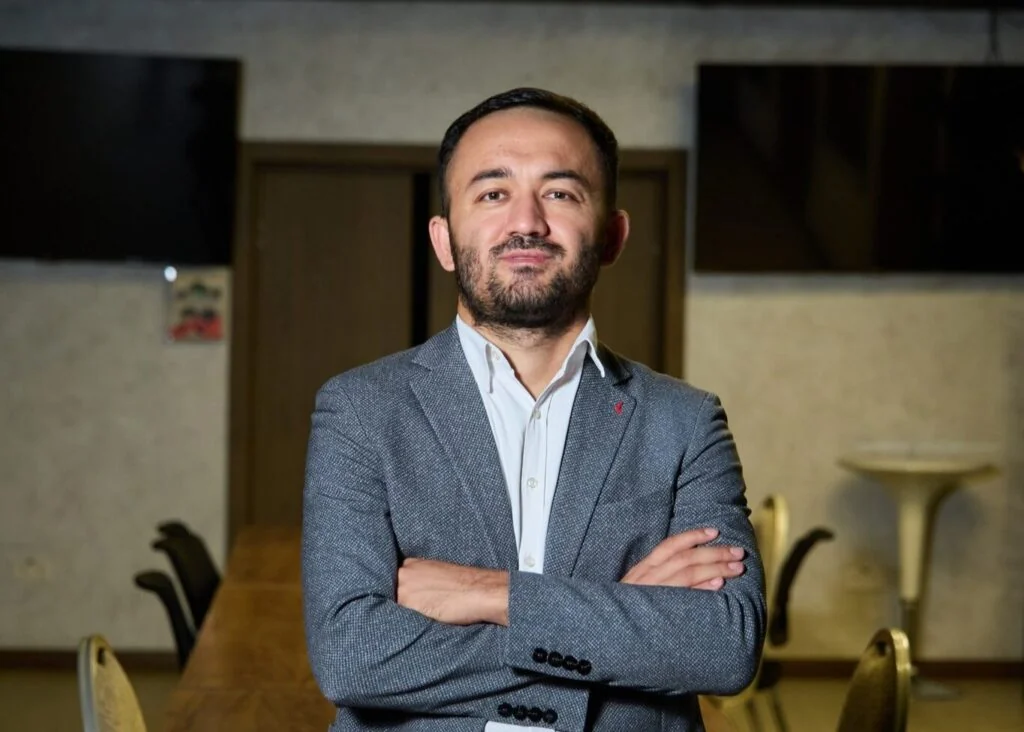
Zukhriddin Nuridddinov — Founder of AURA OS & Algorithm Gateway
“In Some Cases, Productivity More Than Doubled”
– Zukhriddin, what did you do before launching this initiative?
– I earned a business degree from Cardiff Metropolitan University in Malaysia and moved to Singapore. In 2018, partnering with UK-based James Anderson, I founded a fintech company building solutions for banks, asset managers, and blockchain tech in Southeast Asia and Hong Kong.
– How did the idea for AURA OS emerge?
– In 2019, family circumstances brought me back to Tashkent, hiring local devs to remotely support Singapore operations. I also opened Algorithm Gateway for custom software.
Instead of building a product first and hunting for buyers, I reversed the approach. I recalled acquaintances running regional textile manufacturing who constantly complained of operational friction. Visiting one plant, I asked what hurt most.
Raw material shortages force month-long wait times from China or abroad, causing missed sewing deadlines. Severe delays trigger discount demands, next-season deferred buying, or outright cancellations. Warehouses end up jammed with unsellable or heavily discounted stock, shrinking margins and inflating losses. I wanted a system forecasting raw material shortages early enough to act before delays hit cash flow. That birthed AURA OS.
– What exact inefficiencies did your system fix?
– First, uncovering hidden losses. Uzbek manufacturing plants often ignore massive systemic leakages. We aggregated data on production, sales, inventory, finance, and supply chains, then used AI to pinpoint margin-killing bottlenecks.
Owners also scaled throughput without extra headcounts or machinery. Picture a sewing line: seat 1 processes 100 units/hr, seat 2 handles 50, seat 3 does 100. Despite fast flanking workers, the line runs at 50 units/hr.
AURA OS mapped line telemetry to isolate the constraint, letting management cluster high-speed workers onto constrained segments. In isolated cases, output roughly doubled post-reallocation. At one plant planning a $7M expansion (new workshop + headcount) for international orders, our analysis and capacity re-balancing rendered the expansion unnecessary with far fewer hires.
– You position AURA OS as a “system of action.” What does that mean?
– Traditional ERPs are “systems of record” generating retrospective reports. Our goal is tying data to decision-making while time remains to prevent losses.
AURA OS hooks into ERP, inventory, sales, and ledger feeds, combining operational datasets. AI helps teams evaluate operational data, surface upcoming risks (e.g., raw material stockout in 14 days), and choose whether to reorder or reallocate current safety stock. It bridges analytics directly to operational intervention.
“Worked with Over 500 Enterprises Over the Years”
– Who were your early customer acquisition channels?
– Word-of-mouth. Textile factories sit inside broader ecosystems linking material vendors, processors, distributors, and retailers. Seeing seamless fulfillment, downstream/upstream partners adopted the tool.
Early years focused on bespoke software—like management systems for my diagnostic clinic network, CRMs, HR tools—before packaging AURA OS independently in 2023.
– What is your customer scale today?
– Over 80 active paying enterprise manufacturing clients. Across history, we’ve worked with 500+ industrial plants (textiles, apparel, furniture, food/beverage, packaging).
– What adoption friction did you face early on?
– Frontline workers unfamiliar with tech preferred paper logs. We learned not to force usage—simplicity is mandatory. E.g., placing RFID tags on goods and RFID readers at warehouse gates automates scan tracking without manual logging.
Some workers intentionally dragged feet or demanded feature bloat to resist transparency. We realized transparent tracking alters legacy incentives and accountability. True adoption requires aligning ROI for workers: lower operational losses mean stable cash flows, punctual wages, and profit-sharing upside. We view AURA OS as organizational glue, not just a dashboard.
“Invested About $1.7M into AURA OS Development”
– How is pricing structured?
– Scaled by company size, user count, and workflow depth—combining deployment fees with recurring AI-feature subscriptions.
– How was the project funded?
– Roughly $1.7M invested into AURA OS: ~30% personal capital, ~70% retained earnings from the broader software business.
Initially, I thought external venture capital was unnecessary. Participating in the Silkway Accelerator (Astana Hub & Google for Startups) shifted my perspective.
– Why raise capital now?
– Raising $3M to fund R&D acceleration, international expansion, working capital, and organizational resilience independent of founder bottlenecks.
– Which target international markets?
– UK, Southeast Asia, Turkey, and manufacturing hubs. We signed $500k total in Letters of Intent (LOIs) with UK and Indonesian prospects.
– You were also selected for AlchemistX & Silicon Valley Residence. Does US expansion make sense?
– Enterprise sales in the US require deep familiarity with local procurement workflows, buying committees, and compliance norms. Alchemist helps tailor our US go-to-market motion.
– What are the long-term horizons?
– Transforming AURA OS into a global industrial OS covering procurement, raw inputs, production, inventory, sales, finance, and executive decisions. Bringing Central Asia back to its historical trading hub prominence through deep tech.
 Искусственный интеллект