Safe AI Hacker: How Uzbekistan’s Cerberus Tech Solved the Enterprise Trust Problem
Prepared by
Digital Pool

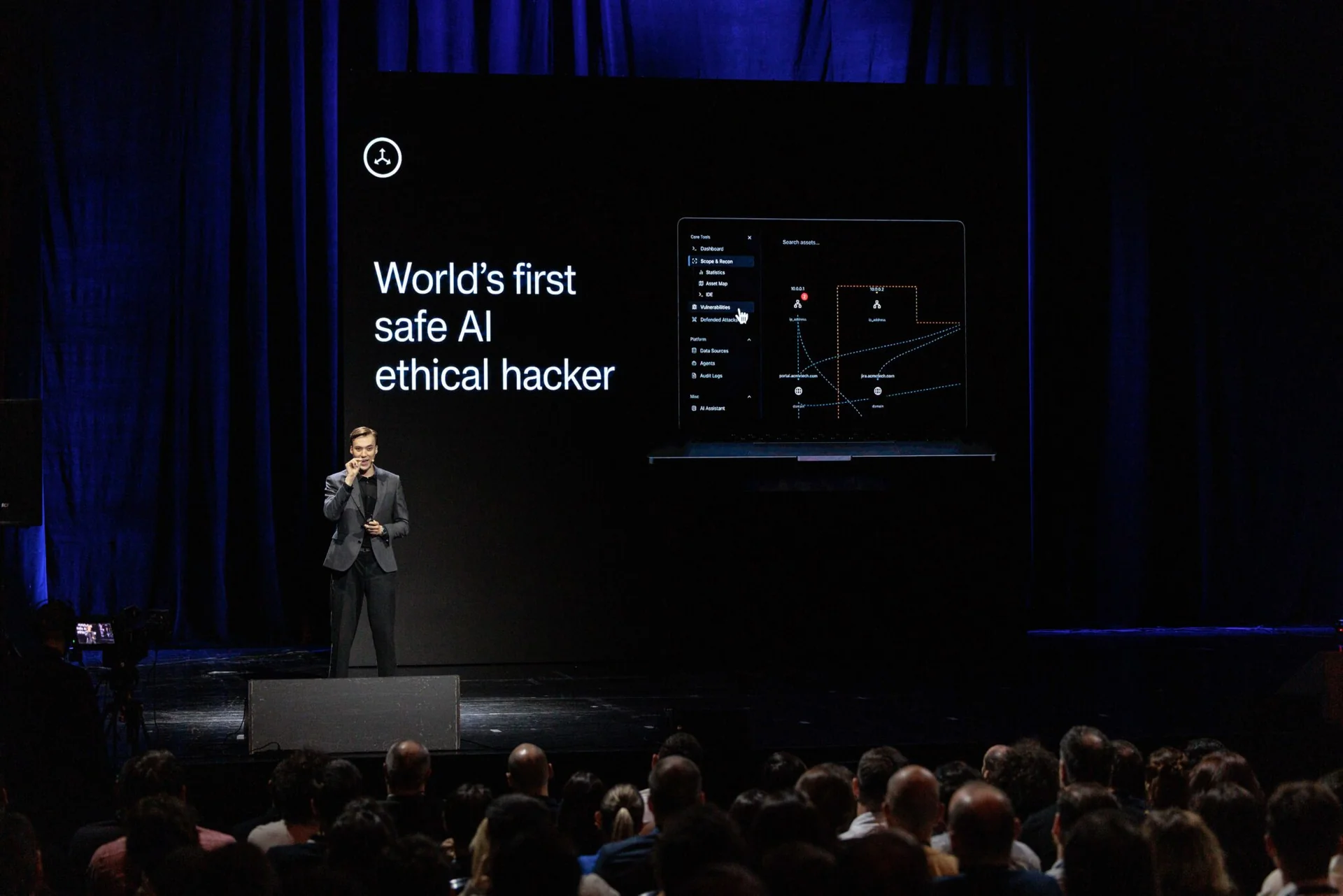
While ChatGPT writes text and generates code, the Cerberus Tech solution from Uzbekistan is teaching artificial intelligence to find vulnerabilities in corporate systems.
How It All Began
We do ethical (white-hat) hacking—when banks, large companies, and other organizations hire hackers themselves to find vulnerabilities in their systems.
Essentially, we wanted to build a service that works on the ChatGPT principle, just for cybersecurity. Instead of asking "write an email," a user can say "check this website" or "find vulnerabilities in this application," and the system executes the task.
At the same time, it does this quickly and significantly cheaper than traditional testing. The cost of checking a single application for us is about $8, and the check itself takes only a few hours.
The idea of an AI hacker is not new in itself; people have dreamed of such a system for a long time. However, the main problem isn’t creating an AI that knows how to hack systems. The core question is whether it can be trusted with access to critical infrastructure. Existing AI systems don’t provide that guarantee. If given overly broad permissions, they can go beyond the scope of the assigned task and cause damage. That’s why most companies are not ready to entrust them with real corporate or banking systems.
Our task was to create a safe AI hacker that can be fully controlled. The user sets a specific goal—for example, check a specific website or application—and the system operates strictly within those boundaries. We mathematically guarantee that it will perform no actions outside the scope of the given task.
To achieve this, we developed our own programming language specifically designed for controlling AI actions. We trained our model on it, so it doesn’t just generate responses—it sequentially writes and executes code until it reaches the goal while staying within the specified constraints.
Launching the Project
Speaking of the development of this project, the story started much earlier. It all traces back to when I was 17 years old. Back then, I made a scientific discovery in theoretical computer science, or more precisely, in the mathematical theory studying the security of programming languages. I was fortunate to make this at a relatively early age, publish the research results, and gain recognition.
At that time, I thought this discovery was applicable only to programming languages. After that, I continued doing research for about another two years.
About a year and a half later, I launched a company in Uzbekistan focused on pentesting, security audits, and white-hat hacking. We helped companies find vulnerabilities in their systems.
When ChatGPT and modern AI models emerged, my team and I realized that my scientific discovery could be applied in a completely different field: using mathematics to make artificial intelligence safe. Essentially, creating a mechanism that allows controlling AI actions in a way no one has done before.
After that, we spent over a year and a half on research, prototyping, and refining the product. From the outside, it might seem like everything happened quickly, but in reality, massive research work stood behind it. We developed our own programming language to control the system, trained models, tested different approaches, and gradually brought the product to today's level.
The Team
The team wasn't formed overnight either. We met back during our university days. At that time, a cybersecurity club operated at the university, and in parallel, I organized a free hacking intensive. I wanted not only to train a new generation of specialists, but also to find strong people to work with further.
About 100 people showed up for the first cohort. But training was intense. Already in the first weeks, a significant portion of participants dropped out, and even more dropped out later. In the end, only a few people completed the program—they turned out to be the strongest.
We met most of the current team right there. They were the best participants of the intensive, and after it ended, we started working together. However, not all employees came from the same university. For example, Abbos Rikhsiev, who leads business development, graduated from MGIMO. This makes complete sense: the person responsible for business development must have strong business expertise, not just technical knowledge.
The team has always actively participated in cybersecurity competitions. We performed at various tournaments in Uzbekistan and organized major cybersecurity competitions in the country ourselves.
Target Audience
All our first clients came through our previous company, C7 Cybersecurity, which has been doing information security audits for years and remains one of the leading companies in this field in Uzbekistan.
During this time, we worked with a large number of banks and large enterprises. When the new product appeared, we offered to test it to clients we had previously cooperated with. For them, we deployed trial and demo versions so they could evaluate the solution's capabilities in real conditions.
Currently, the product is already being tested by many banks in Uzbekistan. As a rule, the pilot period lasts about three months, after which companies make a decision on full-scale implementation.
We sell the product via a license. For corporate clients, the minimum license cost starts at $60,000 per year. This amount includes not just product access, but also technical support, maintenance, and other corporate services.
Aside from banks that were previously our cybersecurity clients, we already have several enterprise clients using the product in operational mode.
Incubation Programs
Speaking of project growth, one of the important milestones was participating in the 500 Global acceleration program. For three months, the team underwent preparation and then pitched on Demo Day in front of investors. Such programs help similar initiatives not only refine their product and business model, but also raise funding at a higher company valuation.
At the initial stage, the initiative developed completely bootstrapped. All revenues from our cybersecurity company were invested into developing the new product. A significant portion of the budget went into research, setting up a testing lab, training models, and running experiments. Therefore, initial development was completely financed by a business that had already been operating for over three years...
 Кибербезопасность